

Giving a voice to those unable to verbalise pain: PART 2
Earlier this year we looked at how PainChek®, the world’s first smartphone pain assessment and monitoring device, uses Artificial Intelligence (AI) and smartphone technology to give a voice to people who cannot verbalise their pain.
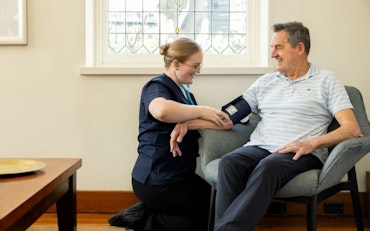
![<p>PainChek® is currently used by around 150 Dementia Support Australia (DSA) consultants [Source: Shutterstock]</p>](https://agedcareguide-assets.imgix.net/news/articles/29-March-Painchek.jpg?fm=pjpg&format=auto&w=550&q=65)
PainChek® is currently used by around 150 Dementia Support Australia (DSA) consultants [Source: Shutterstock]
In this follow-up story, Senior Research Scientist at PainChek® Mustafa Atee explains how the app can help those with dementia, the experience of current users, and how to access the app.
PainChek® is currently used by around 150 Dementia Support Australia (DSA) consultants, who, through their Government-funded Dementia Behaviour Management Advisory Service (DBMAS) and Severe Behaviour Response Teams (SBRT), aim to improve the quality of life for Australians with dementia and their carers.
DSA also provides tailored services to individuals with behavioural and psychological symptoms of dementia (BPSD). A challenging condition, BPSD can be an expression of unmet needs, such as thirst, hunger or pain. According to the DSA, 70 percent of their referrals are related to pain.
In a project entitled “PainChek® in Practice”, the PainChek® app was successfully implemented into the clinical practice by embedding the tool into the work routine of DSA consultants.
The findings of this project lead to better clinical outcomes such as improved pain management and reduced behavioural problems for people with dementia.
Currently, there are more than 50 aged care facilities using PainChek® nationally with more than 20,000 assessments completed to date.
How to access PainChek®
The PainChek® app is currently accessible for licenced users on iOS and Android smartphones and tablets. PainChek® is not only an app available for nurses and carers in residential aged care facilities, known as enterprise users, but also for those who care for people with dementia in home care settings via a shared care model.
Currently, there are more than 436,000 Australians living with dementia and 1.5 million people involved in their care – a large portion of whom remain living at home and cared for by a family member.
With this in mind, PainChek® launched its Shared Care Program in November last year, which enables healthcare professionals to extend their licence to a designated home-based family carer, so they can continue to conduct assessments in between clinical consultations.
The key benefits of the Shared Care Program include:
-
Accurate assessment and monitoring of pain in the home setting
-
Continuity of care between professional carer visits
-
All data associated with these assessments automatically links to the patient’s records within the professional carer’s database (such as a home care operator)
-
Connected data and reporting of patient assessments are viewable via the app (for all carers) or the Web Admin Portal (for professional carers).
Family carers can access free PainChek® training modules, which were created in partnership with Dementia Training Australia, here.
A consumer version of the app will be launched in the near future.
User experience
Perth retirement and nursing home provider Regent Gardens has been using the PainChek® app with great success:
“Having the evidence to support a pain diagnosis has often proved difficult when caring for people with dementia. As a result of using PainChek® we now have two documented cases of reduced use of behavior medication and an improvement in quality of life.”
One resident who displayed severe behavior and always denied pain has shown a significant improvement thanks to PainChek® identifying that she did in fact have pain, despite previous pain assessments not substantiating this.
We see the PainChek® application as a valuable addition to our pain management system. The training and support from the staff at PainChek® has been first class and the registered nurses at Regents Garden have embraced this tool and have nothing but praise for the results that we are finding.”
Read part one of the PainChek® story here.
For more information on PainChek®, head to their website.