


Stirring for change in the aged care kitchen
Aged care food service must go through a revolution, it must move with the changes that have been forced, not only by government but by the expectations of the residents now says Ellis Wilkinson, who is part of a group of industry leaders and high profile individuals actively pushing for change in the industry.
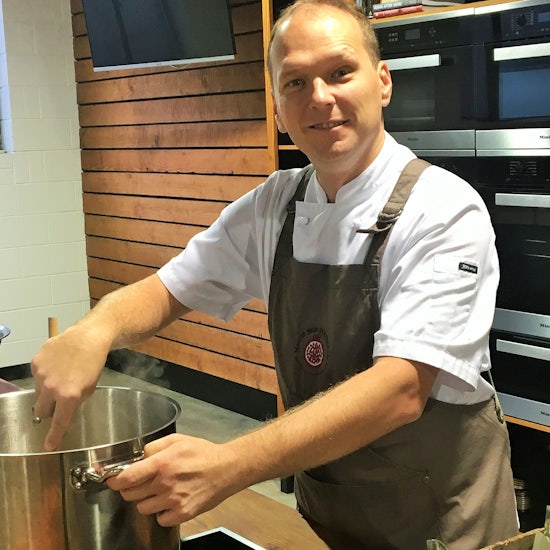
South Australian chef Peter Paues thinks outside of the box
“This is an industry that is not going away, it’s only getting bigger and will shake its poor reputation with the consumer driven approach to the services being provided,” he says.
“The dollars allocated to catering services in some providers needs to be realigned with the upcoming expectations of the informed baby boomers and the generation X that will become the new vocal family members.”
After cooking for over 20 years, Mr Wilkinson worked in management for a global business that ‘happened to be in aged care’. It was here he saw a gap in skills, passion and corporate support within catering services in aged care.
“Some sites were great, some not so,” he says. “I have a deep respect for old people and believe we need to show them dignity and respect through the food we present them on a daily basis.”
Now director of Hotel Services Management Solutions, Mr Wilkinson says aged care is an evolving business and catering services must evolve with it.
“Consumer driven menus and dietary requirements will dictate the base required once the baby boomers are dominating aged care services,” he predicts.
“Creativity will find itself high on the list of ‘must have’ in position descriptions for chefs in aged care.”
South Australian chef Peter Paues, who worked for nationally recognised brands including Cibo and Fasta Pasta before entering the aged care kitchen, says it is working for aged care provider Life Care that has given him the free reign to think outside of the box.
He points out as well as balancing nutrition in everything offered it’s also the little things that mean a lot to a person.
“Particularly for someone living with dementia, such as vegetables being the right colour not overdone and unrecognisable, the way we plate being appealing to the diner and flavour of course being paramount,” he adds. “Everyone has a unique palate and dietary requirements.”
Mr Wilkinson believes aged care cookery will test the everyday chef, and in his opinion, the use of molecular cuisine techniques requires more focus.
“An example of this is giving residents with dysphasia a meal that gives them a pleasurable dining experience. It is not that easy when each meal component may have to be pureed and molecular cuisine fits well here,” he says.
“Developing menus that take into account the cultural and very specific dietary requirements for residents is not as easy as it may sound.”
Mr Paues agrees. “Making sure we keep up with everyone’s individual preferences at all times is a challenge but something we manage to stay on top of,” he says.
“Clients are very appreciative of what we in the kitchen and what all the other staff do for them; since adapting the menus at Life Care to offer increased choice and flavour, I am happy to report I cannot remember the last complaint to come past my kitchen.”
To boost the quality of food on offer in residential care, Mr Paues urges chefs to bring their skill and passion to the industry.
“The clients that you meet are what make it all worthwhile too,” he says. “The hours are fantastic and less demanding than restaurant work which makes it very family friendly.”